
Understanding & Correcting Excessive Back Arching in Postnatal Women
Why Does Your Back Arch Too Much After Pregnancy?
Pregnancy is an incredible journey, but it brings many changes to a woman's body—some of which linger long after childbirth. One common issue postnatal women experience is excessive back arching, also known as hyperlordosis. This occurs when the natural curve in the lower back becomes exaggerated, pushing the stomach forward and tilting the pelvis. For many women, this can lead to discomfort, balance issues, and even long-term back pain.
The good news? This condition is reversible with proper stretching, strengthening, and posture awareness. By understanding why it happens and taking steps to correct it, you can restore proper spinal alignment and feel stronger and more comfortable in your body.
The Link Between Pregnancy & Back Arching
During pregnancy, the body undergoes significant postural changes due to the growing baby. As the abdomen expands, the pelvis tilts forward, shifting the centre of gravity. To compensate, many women naturally increase the arch in their lower back, which can lead to muscular imbalances.
Several factors contribute to this postural shift:
Weakened Core Muscles – Pregnancy stretches the abdominal muscles, reducing their ability to support the lower back.
Pelvic Floor Changes – The weight of the baby and hormonal shifts affect pelvic stability, altering posture.
Hormonal Influence – Pregnancy hormones like relaxin loosen ligaments, making it easier for the pelvis to tilt forward.
Weight Gain & Breastfeeding Posture – Additional weight, combined with hunching while feeding, can create further strain.
Signs You Have Excessive Back Arching
Many postnatal women aren’t even aware that their back arch is excessive. Here are some common signs:
A visible deep curve in the lower back when standing.
Lower back pain or tightness, especially when standing for long periods.
Difficulty engaging your core muscles.
Feeling unstable or imbalanced in certain movements.
A “pushed-out” stomach appearance, even after weight loss.
If you identify with these, it’s time to take action!
Why It’s Important to Fix This
Ignoring excessive arching can lead to several long-term issues:
Chronic back pain due to overuse of the lower spine muscles.
Pelvic instability, increasing the risk of injury.
Hip and knee problems from altered weight distribution.
Weakened core muscles, making postpartum recovery harder.
The good news? Posture can be improved with targeted exercises and awareness.
How to Reduce Excessive Back Arching
The key to correcting postural imbalances is a combination of stretching tight muscles and strengthening weak ones. Studies show that targeted core work and mobility exercises can effectively reduce hyperlordosis and improve spinal alignment (Kuo et al., 2010).
Step 1: Awareness & Daily Adjustments
The first step is becoming aware of your posture throughout the day. Try these simple adjustments:
When standing, gently tuck your pelvis under rather than pushing your hips forward.
Engage your deep core muscles to provide spinal support.
Avoid standing with your knees locked, which can increase the arch.
When sitting, keep both feet flat on the floor and avoid slumping.
If breastfeeding, use a cushion for back support to prevent hunching.
Step 2: The Best Stretching & Strengthening Routine
This simple yet effective circuit routine will help improve back posture by stretching tight areas and strengthening weak muscles. Perform the following exercises as a circuit:
6 reps of each exercise
Rest for 90 seconds between sets
Complete 3 sets
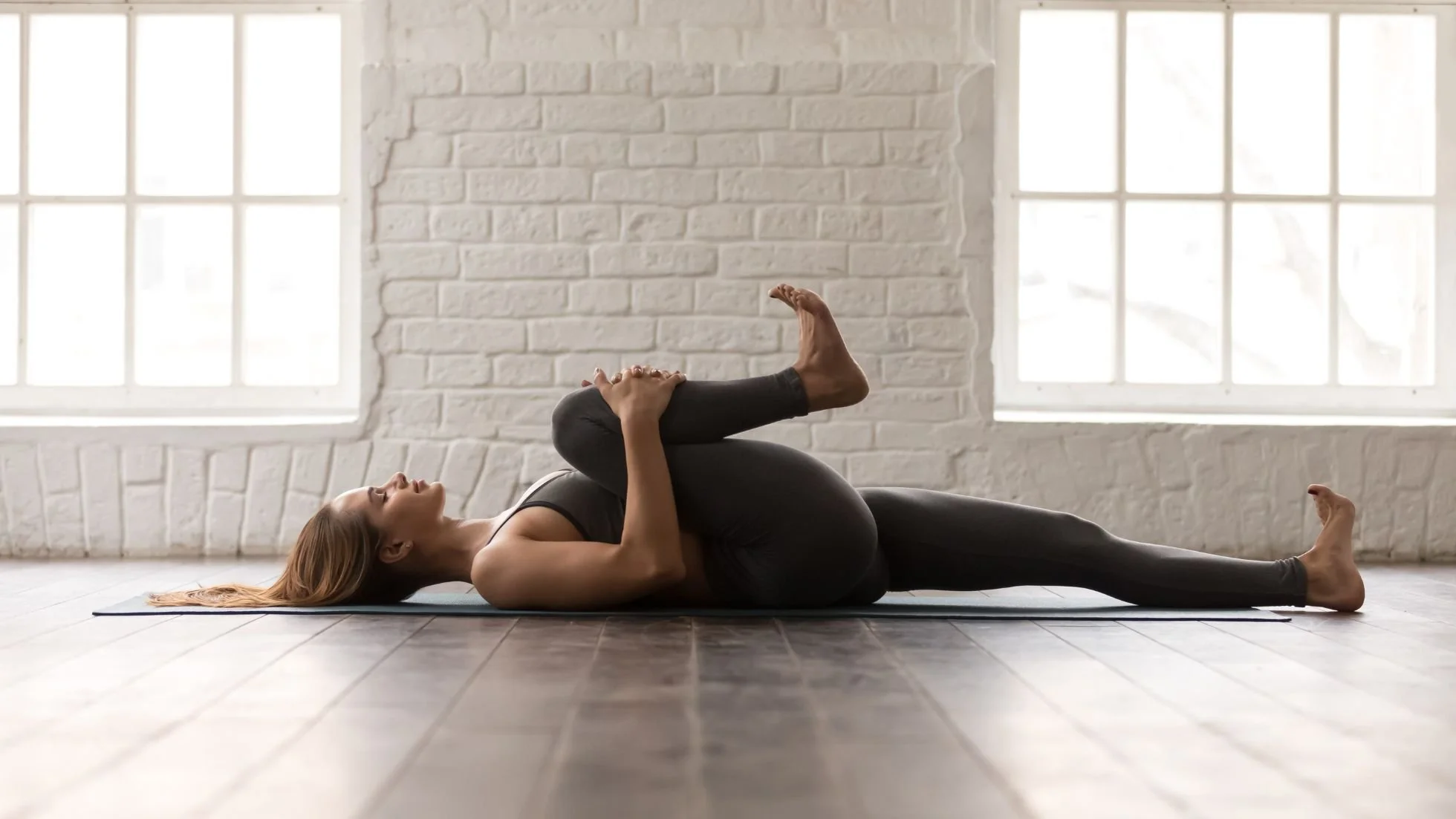
1. Single Knee to Chest Stretch (Hold for 15 seconds)
Releases tight lower back muscles and promotes spinal mobility.
Lie on your back and bring one knee to your chest.
Hold the position while keeping your other leg straight.
Switch legs and repeat.
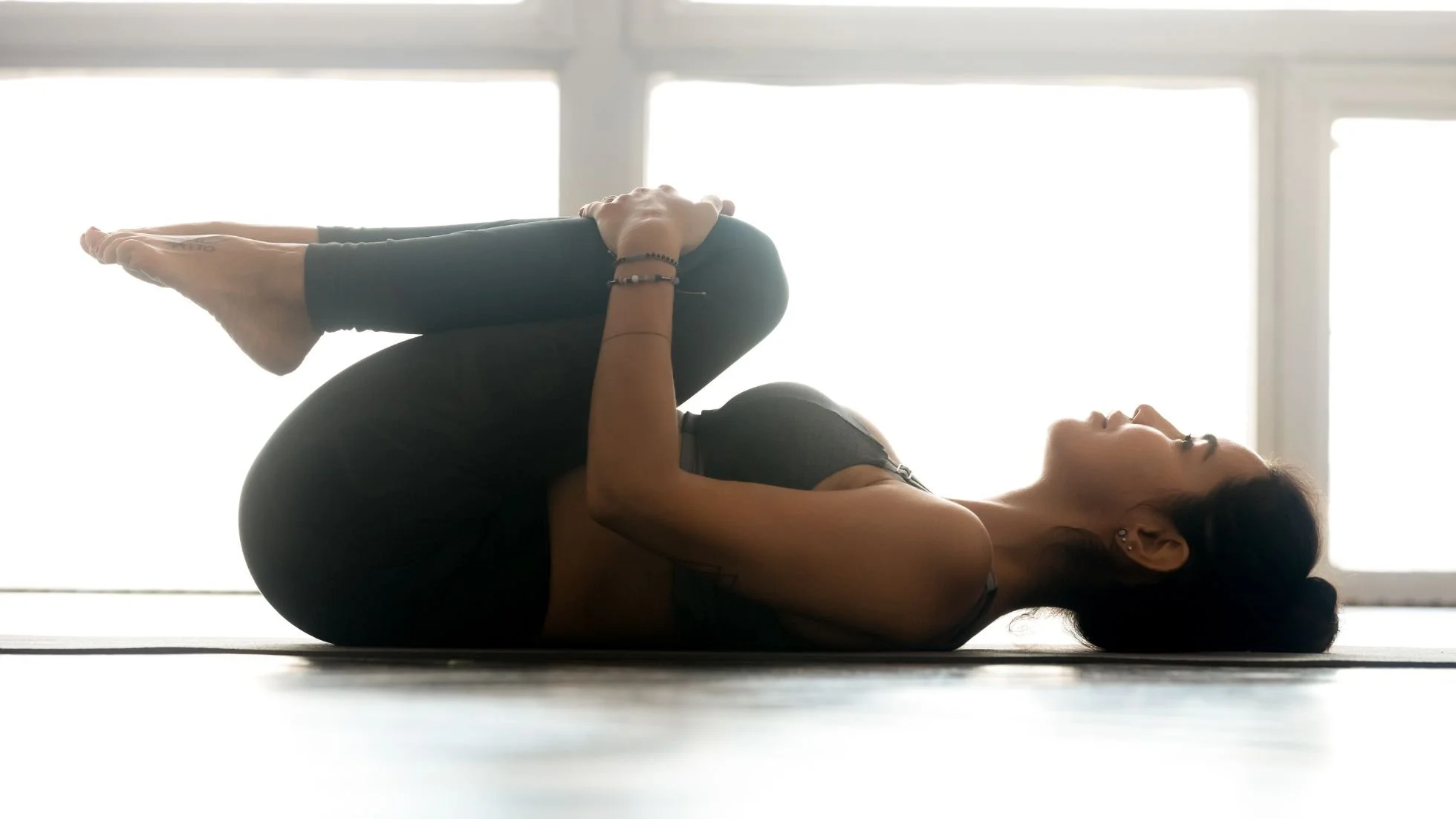
2. Both Knees to Chest Stretch (Hold for 20 seconds)
Helps lengthen the lower back and relieve tension.
Lie on your back and bring both knees to your chest.
Hold for 20 seconds, keeping your back relaxed.
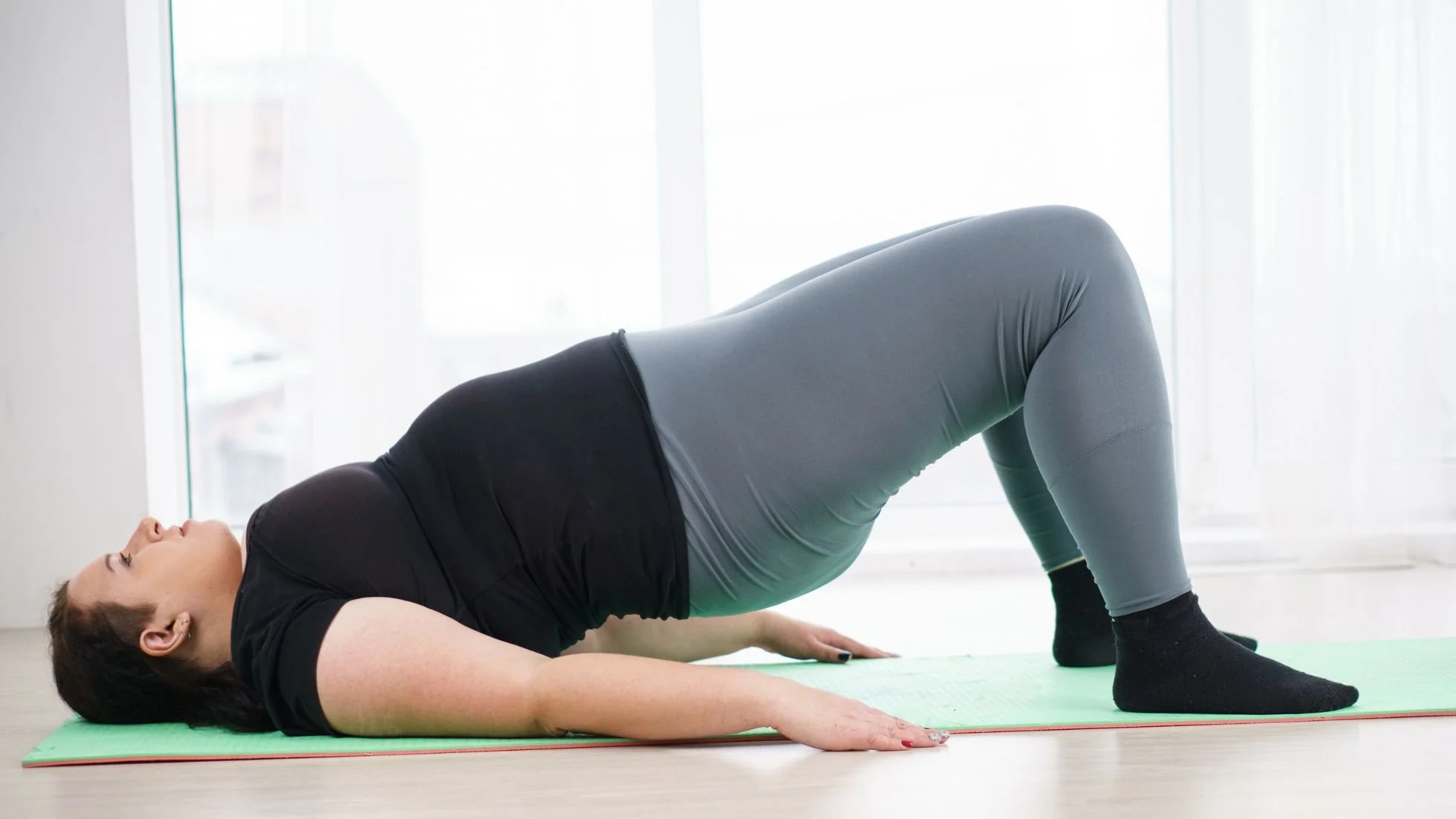
3. Glute/Pelvic Bridge (Hold for 5 seconds)
Strengthens glutes and core muscles to support better spinal alignment.
Lie on your back, knees bent, feet flat.
Lift your hips, engaging your glutes, and hold.
Lower slowly and repeat.
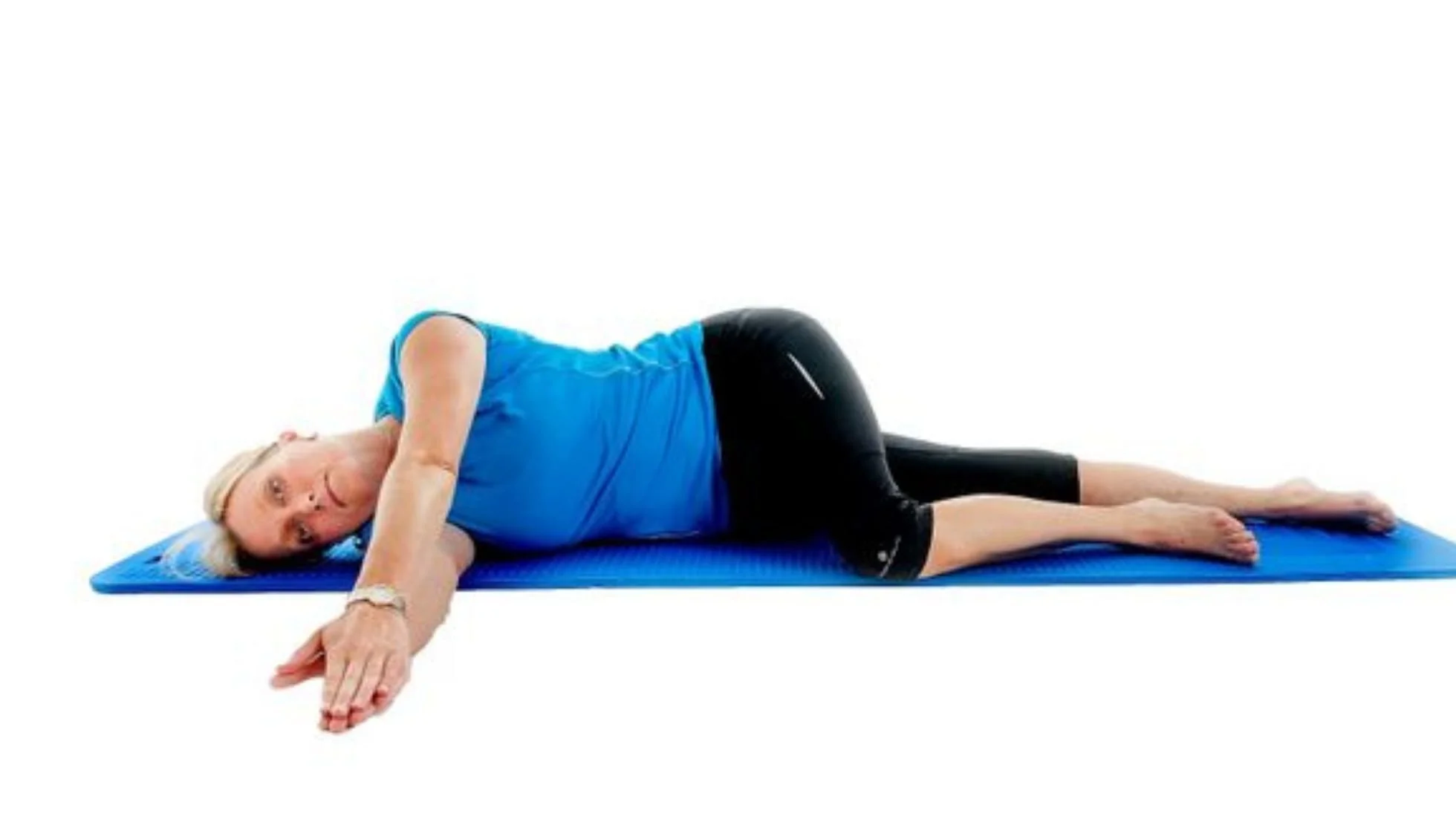
4. Crossed Leg Stretch (Hold for 20 seconds)
Targets tight hip and lower back muscles.
Lie on your back, cross one leg over the other.
Rotate your legs to the side until you feel a stretch.
Hold, then switch sides.
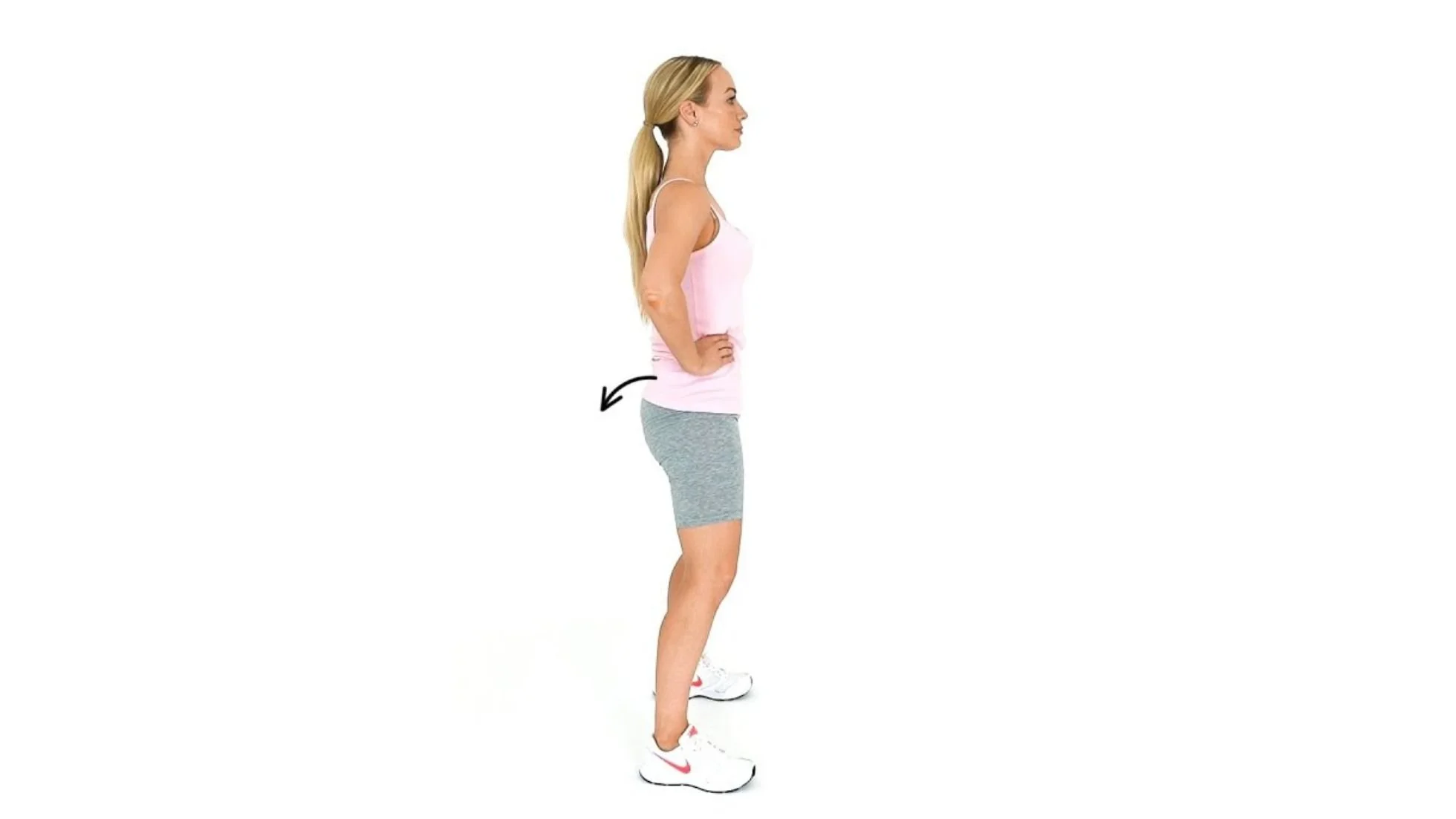
5. Standing Pelvic Tilt (Repeat 5 times)
Encourages better pelvic positioning and spinal alignment.
Stand with your back against a wall.
Slightly bend your knees and tilt your pelvis upward.
Hold for a few seconds, then relax.
How Long Does It Take to See Results?
With consistency, most women notice an improvement within 4-6 weeks. The key is to practice daily and integrate better posture into everyday activities. Strengthening the core and stretching tight muscles consistently will gradually restore a neutral spine position.
Want to Speed Up Your Recovery?
If you're looking for expert guidance, my training programs provide structured workouts tailored to postnatal recovery. My app includes core-strengthening exercises and mobility routines to help correct back posture starting at just £20.
Through the app, you’ll get:
✅ Personalised training plans
✅ Video demonstrations for proper form
✅ Easy-to-follow core workouts for posture improvement
✅ Ongoing support to stay on track
Start feeling stronger, more balanced, and pain-free today! Click [here] to sign up.
Final Thoughts
Excessive back arching is a common postnatal issue, but with the right awareness, stretches, and strength work, you can restore proper posture and feel stronger. Take it one step at a time, listen to your body, and commit to small daily improvements. Your spine—and your future self—will thank you!