

Managing Stress & Overcoming Overwhelm in the Postnatal Period
Bringing a baby into the world is one of the most incredible experiences—but it can also be one of the most overwhelming. Sleepless nights, constant feeding, physical recovery, and adjusting to a new routine can feel mentally and emotionally exhausting.
Many postnatal individuals experience stress, anxiety, and feelings of being overwhelmed—and that’s completely normal. However, learning how to manage stress effectively can help you feel more in control, calmer, and able to enjoy this stage of life more fully.
Bringing a baby into the world is one of the most incredible experiences—but it can also be one of the most overwhelming. Sleepless nights, constant feeding, physical recovery, and adjusting to a new routine can feel mentally and emotionally exhausting.
Many postnatal individuals experience stress, anxiety, and feelings of being overwhelmed—and that’s completely normal. However, learning how to manage stress effectively can help you feel more in control, calmer, and able to enjoy this stage of life more fully.
This article covers why postnatal stress happens, the impact it can have, and practical ways to manage it—so you feel more balanced and supported.
Why Stress Feels So Intense After Birth
Several factors contribute to heightened stress and overwhelm during the postnatal period:
1. Hormonal Shifts & Emotional Changes
After birth, oestrogen and progesterone levels drop sharply, which can affect mood, emotional stability, and energy levels (Henry & Sherwin, 2012). This is why many people experience “baby blues” in the first two weeks postpartum, and for some, these feelings may last longer.
2. Sleep Deprivation & Exhaustion
Disrupted sleep increases stress hormones like cortisol, making you feel more emotional, irritable, and unable to cope with everyday tasks (Dinges et al., 2015).
3. The Mental Load of Parenting
Caring for a newborn involves constant decision-making—from feeding schedules to sleep routines—while also managing daily life. This mental load can feel overwhelming.
4. Pressure to “Do It All”
Many parents feel pressure to keep the house clean, maintain social connections, and "bounce back" physically—all while caring for a newborn. This unrealistic expectation can add unnecessary stress.
5. Lack of Time for Yourself
When every moment is spent caring for your baby, it’s easy to forget about your own needs. This can lead to burnout and feelings of losing yourself in the process.
How Stress Impacts Your Body & Mind
Chronic stress can affect both mental and physical health, leading to:
🚩 Increased fatigue and low energy
🚩 Anxiety, irritability, or low mood
🚩 Difficulty focusing or feeling forgetful
🚩 Digestive issues (bloating, discomfort)
🚩 Increased muscle tension and headaches
But the good news is that small, manageable changes can make a big difference in how you cope with stress.
Practical Ways to Manage Postnatal Stress
1. Focus on What You Can Control
When everything feels overwhelming, break things down into smaller, manageable steps.
🔹 Prioritise 3 key tasks per day instead of trying to do everything at once.
🔹 Lower expectations—your house doesn’t need to be spotless, and not every meal needs to be homemade.
✔ Ask yourself: What truly needs to be done today? What can wait?
2. Use Breathing Techniques to Reduce Stress
Deep breathing can help calm your nervous system and reduce feelings of panic.
🫁 Try this:
Breathe in for 4 seconds.
Hold for 4 seconds.
Breathe out slowly for 6 seconds.
Doing this for just one minute can help lower stress levels (Jerath et al., 2015).
3. Get Outside (Even for 5 Minutes)
Spending just a few minutes outside in natural light can improve mood and energy levels (Pretty et al., 2016).
✅ Take a short walk with your baby (even around the block).
✅ Sit outside for a coffee or deep breath when you need a break.
4. Simplify Meals & Use Supportive Resources
Nutrition plays a huge role in managing stress and energy levels. Instead of stressing over complex meals, focus on easy, nourishing foods.
📌 Thrive & Survive Club members have access to 100s of quick, balanced meal ideas—check your member portal for inspiration!
✔ Batch-cook simple meals so you don’t have to cook daily.
✔ Keep healthy snacks on hand (nuts, yoghurt, boiled eggs) to avoid energy crashes.
5. Ask for Help (And Accept It!)
You don’t have to do everything alone. Whether it’s your partner, family, or a friend, let people help you.
🛒 Ask someone to pick up groceries.
🧺 Let a visitor do a load of washing.
👶 Take a break while someone else holds the baby.
It’s okay to delegate tasks and lighten your mental load.
6. Set Boundaries & Protect Your Energy
If certain situations, people, or expectations are adding stress, it’s okay to set limits.
❌ Say no to visitors if you need rest.
❌ Avoid social media comparisons—everyone’s journey is different.
❌ Give yourself permission to rest without guilt.
✔ Your well-being matters. Protecting your energy will help you show up as your best self for both you and your baby.
Final Thoughts
Feeling overwhelmed in the postnatal period is completely normal, but you don’t have to struggle alone. By focusing on small, manageable changes, seeking support, and prioritising your own well-being, you can navigate this stage with more ease and confidence.
Remember: You’re doing an incredible job. Be kind to yourself, take it one day at a time, and know that you deserve support just as much as your baby does.

Nutrition for Breastfeeding Mothers: Supporting Your Body & Baby
Breastfeeding places additional energy demands on the body, making good nutrition essential for both you and your baby. Eating well can support your recovery, help maintain your milk supply, and keep your energy levels stable while caring for a newborn.
This article covers the key nutrients needed for breastfeeding, how to stay hydrated, and simple meal ideas to help you feel your best.
Disclaimer:
Breastfeeding is different for everyone, and nutritional needs can vary depending on individual circumstances. While this article provides general guidance on nutrition for breastfeeding mothers, it is not a substitute for medical advice. If you have specific concerns about your diet, milk supply, or baby’s health, please consult your health visitor, GP, or a registered dietitian.
Breastfeeding places additional energy demands on the body, making good nutrition essential for both you and your baby. Eating well can support your recovery, help maintain your milk supply, and keep your energy levels stable while caring for a newborn.
This article covers the key nutrients needed for breastfeeding, how to stay hydrated, and simple meal ideas to help you feel your best.
How Many Calories Do You Need When Breastfeeding?
Breastfeeding requires an extra 400-500 kcal per day to support milk production (Neville et al., 2014). However, calorie needs vary based on factors like metabolism, activity levels, and whether you’re exclusively breastfeeding or supplementing with formula.
⚠️ Be cautious with calorie restriction.
If your goal is weight loss, it’s important to take it slow. Cutting too many calories too soon can reduce energy levels and potentially affect milk supply (Lovelady et al., 2000).
Aiming for a moderate, sustainable calorie deficit (250-300 kcal per day) can allow for gradual weight loss without compromising your nutrition or milk supply.
Key Nutrients for Breastfeeding Mothers
To support milk production, recovery, and energy, focus on the following nutrients:
1. Protein (Helps with Recovery & Milk Supply)
Protein is essential for muscle repair, immune function, and maintaining milk production (Phillips, 2016).
✅ Aim for: 1.2-1.7 g per kg (0.54-0.77 g per lb) of body weight daily.
✅ Sources: Lean meats, eggs, dairy, lentils, chickpeas, tofu, fish.
✅ Quick Meal Idea: Greek yoghurt with berries & nuts.
2. Healthy Fats (Supports Brain Function & Hormones)
Your baby’s brain development depends on omega-3 fatty acids, especially DHA (Innis, 2016).
✅ Best Sources:
Oily fish (salmon, sardines, mackerel) – Aim for 2 portions per week (but limit high-mercury fish like swordfish).
Avocados, nuts, seeds, olive oil for hormone balance.
✅ Quick Meal Idea: Wholegrain toast with avocado & smoked salmon.
3. Iron (Prevents Fatigue & Supports Recovery)
Iron stores drop after birth, especially if you had significant blood loss. Low iron levels can lead to fatigue, dizziness, and low energy (Milman et al., 2017).
✅ Sources:
Red meat, turkey, chicken
Lentils, beans, fortified cereals, spinach
Pair iron-rich foods with vitamin C (e.g., peppers, oranges) for better absorption.
✅ Quick Meal Idea: Lentil soup with wholegrain bread & a side of orange slices.
4. Calcium (Supports Bone & Teeth Health for You & Baby)
Breastfeeding increases calcium demands, as your body uses stored calcium to support milk production (Weaver et al., 2016).
✅ Sources:
Dairy (milk, cheese, yoghurt)
Fortified plant-based alternatives
Dark leafy greens (kale, spinach, bok choy)
✅ Quick Meal Idea: Cottage cheese with fruit & almonds.
5. Hydration: The Key to Milk Supply & Energy
Breastfeeding increases fluid loss, so staying hydrated is crucial for milk production and overall well-being.
✅ Aim for: 3-3.5 litres (100-120 oz) per day.
✅ Hydration Tips:
Keep a water bottle nearby during feeds.
Coconut water, herbal teas, and soups can also help.
Signs of dehydration: Dark urine, headaches, dizziness, low milk supply.
What to Limit While Breastfeeding
⚠️ Caffeine – Safe in moderation (200-300 mg/day, about 1-2 cups of coffee), but too much may cause fussiness in babies (Santos et al., 2012).
⚠️ Alcohol – Small amounts are generally fine, but best to wait at least 2-3 hours per drink before breastfeeding (CDC, 2022).
⚠️ Highly processed foods – Can cause energy crashes and affect nutrient intake.
Simple & Quick Meal Ideas for Busy Days
🥣 Breakfast: Overnight oats with Greek yoghurt & flaxseeds.
🥗 Lunch: Wholegrain wrap with hummus, chicken & spinach.
🍛 Dinner: Slow cooker salmon with roasted sweet potatoes & broccoli.
🥜 Snacks: Handful of almonds, cottage cheese with fruit, boiled eggs.
📌 As a Thrive & Survive Club member, you already have access to 100s of meal ideas tailored for busy parents! Check your member portal for easy, nutrient-packed recipes.
Final Thoughts
Breastfeeding places extra demands on your body, making proper nutrition and hydration key to both your health and milk production. Eating balanced meals, drinking plenty of water, and avoiding drastic calorie cuts can help you feel your best while caring for your baby.
⚠️ If you have any concerns about your diet, energy levels, or milk supply, please speak to your health visitor, GP, or a registered dietitian.

The Importance of Self-Care & Prioritising Yourself in the Postnatal Period
Life after having a baby is demanding, exhausting, and often overwhelming. With so much focus on your baby’s needs, it’s easy to put yourself last—skipping meals, ignoring rest, and feeling like there’s never enough time for yourself.
But here’s the truth: You can’t pour from an empty cup. Prioritising your well-being isn’t selfish—it’s essential for both you and your family. When you take care of yourself, you’ll have more energy, patience, and resilience to navigate postnatal life.
Life after having a baby is demanding, exhausting, and often overwhelming. With so much focus on your baby’s needs, it’s easy to put yourself last—skipping meals, ignoring rest, and feeling like there’s never enough time for yourself.
But here’s the truth: You can’t pour from an empty cup. Prioritising your well-being isn’t selfish—it’s essential for both you and your family. When you take care of yourself, you’ll have more energy, patience, and resilience to navigate postnatal life.
This article explores why self-care matters, how to shift your mindset, and simple ways to make time for yourself—even when life feels chaotic.
Why Self-Care is Essential in the Postnatal Period
Many postnatal individuals struggle with feeling guilty for taking time for themselves. But self-care isn’t about indulgence—it’s about replenishing yourself so you can show up as the best version of yourself for both you and your family.
1. Self-Care Supports Your Mental Health
Lack of sleep, hormonal shifts, and the pressures of new parenthood can increase the risk of stress, anxiety, and postnatal depression (Stewart & Vigod, 2016). Taking time for yourself—whether it’s a short walk, a deep breath, or a moment of quiet—can help regulate stress and improve mood.
2. Prioritising Yourself Increases Energy & Well-Being
When you fuel your body well, rest when needed, and move regularly, you’ll feel stronger, healthier, and more capable of handling daily demands (Mindell & Williamson, 2018).
3. It Sets a Healthy Example for Your Children
By making self-care a priority, you’re teaching your children that well-being matters. When they see you taking care of yourself, they learn that it’s important to do the same as they grow.
How to Shift Your Mindset: Let Go of Guilt
Many people struggle with putting their own needs first, believing that they should be doing more for their family. But prioritising yourself doesn’t take away from them—it benefits everyone.
Ask yourself: 🤔 Would you encourage a friend to take care of themselves? 🤔 Would you want your child to feel guilty about resting or asking for help?
If the answer is no, then why should it be different for you?
Simple Ways to Practise Self-Care (Even When You’re Busy)
Self-care doesn’t have to mean spa days or long breaks away—it’s about small, consistent actions that support your well-being.
1. Fuel Your Body with Proper Nutrition
Skipping meals or grabbing processed snacks may seem easier, but nutrient-dense meals give you the energy you need to function at your best.
📌 Check the Thrive & Survive Club for easy, healthy meal ideas that fit into a busy postnatal routine.
2. Move Your Body (Without Pressure)
Exercise isn’t just for fitness—it’s a powerful mood booster and energy enhancer (Puetz et al., 2006). Even 10 minutes of movement can help improve circulation, release endorphins, and ease stress.
Try: ✅ A short walk outside ✅ Gentle stretching or yoga ✅ Postnatal strength exercises
3. Make Sleep a Priority (Where Possible)
While full nights of sleep may not be realistic, small adjustments can help:
Nap when possible (even a 20-minute rest helps)
Ask for support so you can sleep longer stretches
Reduce screen time before bed to improve sleep quality
4. Set Boundaries & Ask for Help
You don’t have to do everything alone. Whether it’s asking your partner to take over for an hour, letting a friend help with errands, or saying no to extra commitments—giving yourself space is an act of self-care.
5. Do One Small Thing for Yourself Every Day
It doesn’t have to be big—just something that makes you feel like YOU.
💆♀️ A cup of tea in peace 📖 Reading a chapter of a book 🎶 Listening to music or a podcast 🌿 A few minutes of fresh air
These moments remind you that you’re not just a parent—you’re still you, and your well-being matters.
Final Thoughts
Taking care of yourself isn’t a luxury—it’s a necessity. You deserve the same love and care that you give to others.
By making small, intentional choices to prioritise your well-being, you’ll feel more balanced, resilient, and able to enjoy the postnatal journey with greater ease.
Remember: You are important, and taking care of yourself is one of the best things you can do for both you and your family.
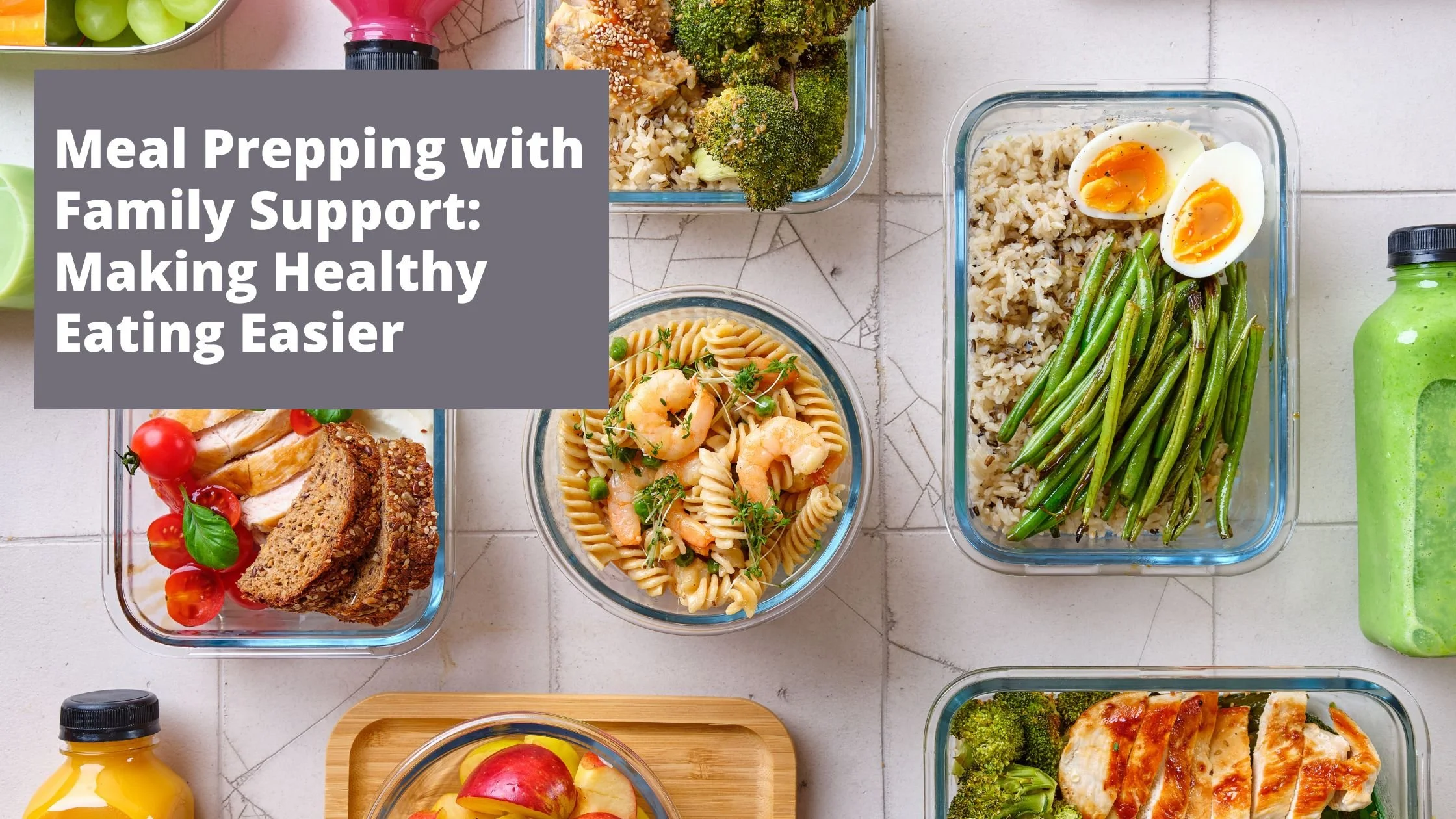
Meal Prepping with Family Support: Making Healthy Eating Easier
Finding time to cook nutritious meals can feel overwhelming in the postnatal period—especially when juggling a newborn, disrupted sleep, and daily responsibilities. This is where meal prepping and family support can make all the difference.
By preparing meals in advance and getting those around you involved, you can save time, reduce stress, and make healthier choices easier, even on the busiest days.
Meal Prepping with Family Support: Making Healthy Eating Easier
Finding time to cook nutritious meals can feel overwhelming in the postnatal period—especially when juggling a newborn, disrupted sleep, and daily responsibilities. This is where meal prepping and family support can make all the difference.
By preparing meals in advance and getting those around you involved, you can save time, reduce stress, and make healthier choices easier, even on the busiest days.
This article will walk you through how to meal prep effectively, ways to involve family members, and how you can use the 100s of recipes available in the Thrive & Survive Club to simplify mealtimes.
Why Meal Prepping Matters in the Postnatal Period
✔ Saves time & reduces stress – Having meals ready means less time cooking and more time for yourself and your baby.
✔ Supports energy & recovery – Prepping nutrient-dense meals ensures you eat well, even when tired.
✔ Prevents skipping meals – Lack of time can lead to missing meals, which affects energy and mood.
✔ Helps with weight loss (if that’s a goal) – Having balanced meals ready reduces the temptation to grab processed foods or takeaways.
Meal prepping isn’t about cooking elaborate dishes—it’s about making sure you have healthy, ready-to-eat options available when you need them.
Step 1: Use Batch Cooking & Slow Cookers to Save Time
One of the best ways to ensure you always have nutritious meals ready is to cook in large batches or use a slow cooker.
Batch Cooking for Quick, Ready Meals
Batch cooking means preparing larger portions of meals that you can store for the week. This works well for:
🥣 Soups & stews – Lentil soup, chicken stew, or vegetable curry
🍚 Grain-based meals – Quinoa, rice, or pasta with pre-cooked proteins and veggies
🥗 Pre-made protein sources – Cooked chicken, boiled eggs, beans, or tofu for quick meal assembly
🌯 Wraps & salads – Pre-chopped veggies, lean proteins, and wholegrain wraps for grab-and-go meals
Why Slow Cookers Are a Postnatal Lifesaver
Slow cookers allow you to prep meals in minutes and let them cook throughout the day—perfect when time and energy are limited.
⏳ Why use a slow cooker?
✅ Minimal effort—just throw in the ingredients and let it cook
✅ Large portions—make extra to freeze for later
✅ Tender & flavourful meals—ideal for proteins, stews, and curries
Slow Cooker Meal Ideas (available in the Thrive & Survive Club):
🍲 Slow Cooker Chicken & Sweet Potato Curry
🥘 Beef & Lentil Stew
🌱 Vegetarian Chilli
📌 As a Thrive & Survive Club member, you already have access to 100s of meal prep and slow cooker recipes! Head to your member portal for inspiration.
Step 2: Get Family Support (You Don’t Have to Do It Alone!)
1. Ask for Help with Prep & Cooking
Many partners, family members, and even older children want to help but may not know how. Simple ways they can support you:
👨🍳 Cooking a meal once a week – A pre-planned recipe makes it easy.
🔪 Chopping veggies or portioning out meals – Quick but helpful tasks.
🛒 Grocery shopping – Whether in-store or online, a shared shopping list saves time.
2. Plan a Weekly ‘Meal Prep Hour’ Together
Set aside one hour per week where everyone contributes. Even small tasks like washing greens, roasting veggies, or portioning snacks lighten the load and make healthy eating easier.
Step 3: Make Snacks & Easy Meals Accessible
When you’re exhausted, having quick, nutritious snacks ready can stop you from reaching for processed foods.
🍏 Snack ideas:
Boiled eggs & hummus
Greek yoghurt with fruit
Wholegrain crackers with cheese
Energy balls (recipe in Thrive & Survive Club!)
⏳ 5-Minute Meal Ideas:
Scrambled eggs & avocado on toast
Protein smoothie with banana & nut butter
Wholegrain wrap with lean protein & veggies
Step 4: Use the Thrive & Survive Club for Recipes & Inspiration
If you’re struggling with meal ideas, remember that as a Thrive & Survive Club member, you already have access to 100s of quick, family-friendly recipes designed for busy postnatal life.
✔ Quick & healthy meal ideas
✔ Batch-cooking & slow cooker recipes
✔ Snacks & nutrient-dense foods to boost energy
💡 Check your member portal for recipe inspiration and meal prep guides!
Final Thoughts
Meal prepping doesn’t have to be overwhelming. Start small, get family involved, and use the Thrive & Survive Club recipes to make life easier.
By planning ahead and asking for help, you’ll free up time, reduce stress, and ensure you’re eating well—so you can feel your best during your postnatal journey.
Hydration & Nutrition for Recovery
Recovering after birth isn’t just about getting back to exercise—it starts with proper hydration and nutrition. Your body has been through an immense transformation, and fuelling it well can speed up recovery, boost energy, and support overall well-being.
Hydration & Nutrition for Postnatal Recovery
Recovering after birth isn’t just about getting back to exercise—it starts with proper hydration and nutrition. Your body has been through an immense transformation, and fuelling it well can speed up recovery, boost energy, and support overall well-being.
This article explores why hydration is critical, how to balance key nutrients for healing, and simple ways to nourish your body even on the busiest days.
The Role of Hydration in Postnatal Recovery
Water is essential for healing, digestion, energy levels, and hormone regulation. Dehydration can lead to fatigue, headaches, poor concentration, and reduced milk supply (if breastfeeding) (Popkin et al., 2010).
How Much Water Do You Need?
At least 2.5-3 litres (85-100 oz) per day
If breastfeeding: Aim for 3-3.5 litres (100-120 oz) per day, as milk production is water-intensive (Neville et al., 2014).
Listen to thirst signals, but if you often forget to drink, keep a water bottle nearby as a reminder.
Signs You May Be Dehydrated:
🚩 Fatigue and low energy
🚩 Dizziness or headaches
🚩 Dark urine or infrequent urination
🚩 Dry skin and lips
Hydration Tip: If plain water feels boring, try herbal teas, coconut water, or infused water with lemon and mint. Soups and high-water foods (like cucumbers and watermelon) can also contribute to your daily intake.
Key Nutrients for Postnatal Recovery
Eating the right foods helps the body repair, replenish energy, and regulate hormones. Here’s what to prioritise:
1. Protein for Healing & Strength
Protein supports muscle repair, tissue healing, and immune function (Phillips, 2016). Aim for 1.2-1.6 g per kg of body weight (0.54-0.73 g per lb) daily.
Easy protein sources:
Eggs, Greek yoghurt, cottage cheese
Chicken, fish, lean beef
Lentils, chickpeas, tofu
Quick meal idea: Scrambled eggs with wholegrain toast & avocado
2. Healthy Fats for Hormonal Balance
Postnatal hormone shifts can impact mood, energy, and metabolism. Healthy fats support hormone production and brain function (Innis, 2016).
Best sources of healthy fats:
Oily fish (salmon, sardines) – rich in omega-3s for brain health
Nuts, seeds, avocados, olive oil
Quick meal idea: A handful of almonds & a banana for a balanced snack
3. Iron & B Vitamins for Energy
Low iron levels are a common cause of postnatal fatigue, especially after blood loss during birth (Milman et al., 2017).
Iron-rich foods:
Red meat, turkey, shellfish
Lentils, spinach, pumpkin seeds
Vitamin B12 sources:
Eggs, dairy, fish, fortified cereals
Quick meal idea: Spinach & lentil soup with wholegrain bread
4. Fibre & Complex Carbs for Sustained Energy
Instead of quick sugar fixes, focus on slow-digesting carbs to keep energy steady.
Great choices:
Oats, quinoa, sweet potatoes, brown rice
Beans, lentils, wholegrain bread
Quick meal idea: Overnight oats with Greek yoghurt & berries
5. Calcium & Vitamin D for Bone & Muscle Health
If you’re breastfeeding, your body pulls calcium from your bones to support milk production (Weaver et al., 2016). Vitamin D also plays a role in mood and immune function.
Sources of calcium & vitamin D:
Dairy, fortified plant milk, dark leafy greens
Sunlight exposure, eggs, oily fish
Quick meal idea: Greek yoghurt with nuts & honey
How to Eat Well When You're Tired & Busy
It’s easy to skip meals when juggling newborn care, but eating regularly is key to preventing energy crashes and mood swings.
Simple Strategies to Stay on Track:
✔ Batch cook & freeze meals – Soups, stews, or pre-cooked proteins make life easier ✔ Keep healthy snacks on hand – Nuts, boiled eggs, protein bars, fruit ✔ Hydrate consistently – Carry a water bottle and sip throughout the day ✔ Focus on small, frequent meals – Eating every 3-4 hours can help maintain energy
Final Thoughts
Hydration and nutrition play a huge role in postnatal recovery, energy levels, and overall well-being. By prioritising water, protein, healthy fats, and nutrient-dense meals, you can support your body’s healing and feel stronger each day.
Your body has done something amazing—nourish it with care, not restriction.
References:
Innis, S. M. (2016). Dietary omega-3 fatty acids and the developing brain. American Journal of Clinical Nutrition, 104(2), 623-635.
Milman, N., et al. (2017). Iron supplementation in pregnancy and postpartum. Nutrients, 9(6), 543.
Neville, C. E., et al. (2014). Breastfeeding, energy balance, and body composition in women. Advances in Nutrition, 5(6), 649-659.
Phillips, S. M. (2016). The impact of protein quality on muscle mass maintenance. Nutrition & Metabolism, 13(1), 1-9.
Popkin, B. M., et al. (2010). Water, hydration, and health. Nutrition Reviews, 68(8), 439-458.
Weaver, C. M., et al. (2016). Calcium requirements during pregnancy and lactation. Journal of Bone and Mineral Research, 31(12), 2213-2223.

Understanding Postnatal Fatigue & Managing Energy
Fatigue is one of the biggest challenges in the postnatal period. Whether you’re recovering from birth, adjusting to disrupted sleep, or caring for a newborn around the clock, feeling exhausted is completely normal.
Fatigue is one of the biggest challenges in the postnatal period. Whether you’re recovering from birth, adjusting to disrupted sleep, or caring for a newborn around the clock, feeling exhausted is completely normal.
However, while postnatal fatigue is common, it doesn’t mean you have to suffer through it without support. Understanding why it happens and how to manage your energy levels can help you feel more in control and make daily life a little easier.
This article explores the causes of postnatal fatigue, how to fuel your body for energy, and practical ways to manage exhaustion while navigating postnatal life.
Why Postnatal Fatigue Happens
Fatigue in the postnatal period isn’t just about a lack of sleep—though that’s certainly a major factor. There are several biological, hormonal, and lifestyle reasons why energy levels drop after birth:
1. Sleep Deprivation & Broken Sleep Cycles
Newborns wake frequently to feed, which disrupts deep sleep cycles and limits restorative rest. Even when you do sleep, the quality is often poor, leading to ongoing exhaustion (Mindell & Williamson, 2018).
2. Hormonal Shifts & Energy Regulation
During pregnancy, your body produces high levels of progesterone and oestrogen, which help sustain energy. However, post-birth, these hormones drop sharply, leading to fatigue, mood fluctuations, and brain fog (Henry & Sherwin, 2012).
3. Nutritional Deficiencies
Pregnancy and birth deplete essential nutrients, including:
Iron – A common cause of extreme tiredness, especially if you experienced blood loss during delivery (Milman et al., 2017).
B12 & Folate – Needed for red blood cell production and energy metabolism.
Omega-3s & Vitamin D – Affect brain function, mood, and fatigue levels.
If you feel constantly drained, a blood test to check for iron, vitamin D, and B12 deficiencies may be beneficial.
4. Breastfeeding & Increased Energy Demands
Breastfeeding requires an extra 400-500 kcal per day to support milk production, meaning your body is burning more energy than usual (Neville et al., 2014). If you’re not eating enough, energy levels can plummet.
5. Emotional & Mental Load
The demands of caring for a newborn, adjusting to a new routine, and coping with the mental load of parenthood can be emotionally draining. Mental exhaustion can feel just as heavy as physical fatigue (Kendall-Tackett, 2007).
How to Manage Energy Levels in the Postnatal Period
While you can’t control every factor contributing to postnatal fatigue, there are ways to support your body and manage energy more effectively.
1. Prioritise Nutrient-Dense Meals for Energy
Eating well doesn’t have to be complicated. Instead of reaching for quick-fix energy boosters like sugar and caffeine (which cause crashes), focus on:
Iron-rich foods (lean meats, lentils, spinach, fortified cereals)
Protein & healthy fats (eggs, nuts, Greek yoghurt, salmon)
Slow-releasing carbs (oats, quinoa, whole grains) for steady energy
Hydration – Dehydration worsens fatigue, so aim for 2.5-3 litres of water per day (Popkin et al., 2010).
If you’re struggling to eat properly, simple batch-prepped meals and healthy snacks can make a huge difference.
2. Adjust Exercise to Work With (Not Against) Your Energy
While movement can boost energy, too much too soon can drain you further. Listen to your body and focus on: ✅ Low-intensity movement – Short walks, stretching, or postnatal yoga ✅ Strength training (when ready) – Builds long-term energy by improving metabolism and muscle function ✅ Restorative exercise – Breathing exercises and gentle mobility work to support recovery
Even 5-10 minutes of movement can help improve circulation and mood without exhausting you (Puetz, 2006).
3. Sleep Smarter, Not Longer
With a newborn, long, uninterrupted sleep may not be possible—but small adjustments can improve sleep quality:
Nap when you can (even 20-minute naps help recovery)
Limit blue light exposure at night (reduce screen time before bed)
Try to go to bed early when possible
Even short, restorative rest periods can help ease fatigue (Dinges et al., 2015).
4. Ask for Help & Reduce the Mental Load
You don’t have to do everything alone. If possible, ask for support from a partner, friend, or family member. Small things like meal prep, household tasks, or baby care can free up mental energy and reduce stress.
It’s also okay to let go of perfection—the dishes, laundry, and social obligations can wait.
5. Be Kind to Yourself
Postnatal fatigue is normal and temporary. Instead of focusing on how much you “should” be doing, give yourself grace and patience. Some days will be easier than others, and that’s okay.
Final Thoughts
Feeling exhausted in the postnatal period is completely normal, but there are ways to manage energy and support recovery. By fueling your body well, prioritising rest, moving gently, and asking for help, you can navigate this stage with more ease and balance.
Your energy will return over time—so be patient, take it one step at a time, and focus on what feels good for you and your body.
References:
Dinges, D. F., et al. (2015). The impact of sleep restriction on cognitive and physical performance. Sleep Medicine Clinics, 10(1), 1-10.
Henry, J. F., & Sherwin, B. B. (2012). Hormones and cognitive functioning in postnatal women. Neuropsychology Review, 22(1), 25-40.
Kendall-Tackett, K. (2007). A new paradigm for depression in new mothers: The role of inflammation and stress. International Breastfeeding Journal, 2(1), 1-14.
Mindell, J. A., & Williamson, A. A. (2018). The importance of sleep for maternal and infant health. Journal of Clinical Sleep Medicine, 14(7), 1087-1092.
Milman, N., et al. (2017). Iron supplementation in pregnancy and postpartum. Nutrients, 9(6), 543.
Neville, C. E., et al. (2014). Breastfeeding, energy balance, and body composition in women. Advances in Nutrition, 5(6), 649-659.
Popkin, B. M., et al. (2010). Water, hydration, and health. Nutrition Reviews, 68(8), 439-458.
Puetz, T. W. (2006). The effect of exercise on energy and fatigue: A meta-analysis. Psychological Bulletin, 132(6), 866-876.

The Importance of a Gentle Start & Mindset Shift in Postnatal Recovery
The postnatal period is a time of immense physical, emotional, and mental adjustment. Your body has just gone through a major transformation, and while you may feel eager to regain strength, fitness, or even lose weight, taking a gentle approach is essential.
This article will explore why starting slow is key, the importance of shifting your mindset, and how to build a sustainable routine that prioritises long-term health, rather than rushing into intense exercise or strict dieting.
The postnatal period is a time of immense physical, emotional, and mental adjustment. Your body has just gone through a major transformation, and while you may feel eager to regain strength, fitness, or even lose weight, taking a gentle approach is essential.
This article will explore why starting slow is key, the importance of shifting your mindset, and how to build a sustainable routine that prioritises long-term health, rather than rushing into intense exercise or strict dieting.
Why a Gentle Start Matters
Your body has done something incredible—growing and delivering a baby. It now needs time to heal, recover, and rebuild strength. Rushing into intense exercise too soon can increase the risk of injury, weaken core and pelvic floor muscles, and lead to exhaustion rather than progress.
Key Considerations for a Safe Start:
✔ Your core and pelvic floor need time – Pregnancy and birth stretch and weaken the core and pelvic floor muscles, making them more prone to issues like diastasis recti or pelvic organ prolapse if overstrained too early (Bo et al., 2017).
✔ Hormonal shifts affect flexibility and strength – Relaxin, a hormone that loosens ligaments during pregnancy, remains in the body for several months postpartum. This can increase the risk of joint instability if exercises are too intense (Daly et al., 2016).
✔ Sleep deprivation impacts recovery – Lack of sleep increases stress hormones like cortisol, making it harder for the body to recover, maintain energy, and regulate appetite (Knutson, 2015).
✔ Breastfeeding (if applicable) increases energy demands – The body burns extra 400-500 kcal per day to support milk production, so under-eating or over-exercising can lead to fatigue and reduced milk supply (Neville et al., 2014).
This is why gentle movement, breathwork, and core activation should be the first steps—not jumping straight into high-intensity workouts.
The Mindset Shift: Rebuilding vs. "Bouncing Back"
The fitness industry often promotes the idea of “bouncing back” after birth, but this mindset can be damaging. The truth is, postnatal recovery isn’t about getting your "pre-baby body" back—it’s about building a strong, functional body that serves you in this new phase of life.
Instead of thinking about how quickly you can lose weight or regain strength, focus on:
✅ Listening to your body – Some days you’ll feel great, other days you’ll need rest. Both are okay.
✅ Setting realistic expectations – Progress is gradual, and small, consistent steps matter more than intensity.
✅ Appreciating what your body has done – Your body has carried, nourished, and delivered a baby. That’s a massive achievement, and it deserves kindness and patience.
A long-term approach to recovery leads to better strength, mobility, and overall well-being than rushing to lose weight or regain fitness too quickly (MacLean et al., 2015).
How to Build a Safe & Effective Routine
1. Focus on Postnatal-Safe Movements
Start with breathwork, pelvic floor activation, and gentle core engagement exercises. Movements like glute bridges, bodyweight squats, and seated upper body exercises can help rebuild strength without straining your core or pelvic floor.
2. Make Time for Recovery
Hydration, sleep (as much as possible), and nutrient-rich meals are just as important as exercise. A lack of recovery can stall progress and increase fatigue (Morris et al., 2017).
3. Set Small, Achievable Goals
Rather than aiming to “get fit” immediately, set small, manageable goals:
✅ Walk for 10-15 minutes daily
✅ Do 5 minutes of breathing exercises
✅ Stretch for 5-10 minutes in the evening
These small efforts add up over time and create a foundation for long-term strength.
4. Be Kind to Yourself
Some days will feel easy, others will feel impossible. Your worth isn’t measured by how much you exercise or how fast you “bounce back.” Consistency, not perfection, is what leads to real progress.
Final Thoughts
A gentle start to postnatal fitness is the best way to heal, rebuild strength, and prevent setbacks. Instead of chasing unrealistic goals, shift your focus to nourishing, rebuilding, and strengthening your body over time.
Your postnatal recovery is a journey, not a race—and the longer you take to do it right, the stronger and healthier you’ll feel in the long run.
References:
Bo, K., et al. (2017). Exercise and pelvic floor dysfunction in women. Journal of Women's Health, 26(2), 105-110.
Daly, E. M., et al. (2016). Relaxin and postnatal joint stability: A review. European Journal of Physiology, 472(4), 725-734.
Knutson, K. L. (2015). The impact of sleep deprivation on energy balance and weight regulation. Current Opinion in Clinical Nutrition & Metabolic Care, 18(4), 333-339.
MacLean, P. S., et al. (2015). The importance of long-term weight management strategies. Obesity Reviews, 16(6), 451-470.
Morris, D. M., et al. (2017). Sleep and recovery in postpartum women: A review. Journal of Maternal & Child Health, 21(3), 523-532.
Neville, C. E., et al. (2014). Breastfeeding, energy balance, and body composition in women. Advances in Nutrition, 5(6), 649-659.

A Safe Approach to Nutrition & Weight Loss
Bringing a baby into the world is a life-changing experience, and the postnatal period can feel overwhelming as you adjust to new routines, disrupted sleep, and the demands of caring for a newborn. With so much on your plate, nutrition often takes a backseat, yet it plays a crucial role in your recovery, energy levels, and overall well-being.
Bringing a baby into the world is a life-changing experience, and the postnatal period can feel overwhelming as you adjust to new routines, disrupted sleep, and the demands of caring for a newborn. With so much on your plate, nutrition often takes a backseat, yet it plays a crucial role in your recovery, energy levels, and overall well-being.
This article will guide you through simple and quick postnatal meal planning while ensuring your body gets the fuel it needs—especially if weight loss is a goal. However, it’s important to approach postnatal weight loss with care, ensuring that you nourish your body adequately rather than deprive it.
Understanding Caloric Needs in the Postnatal Period
Many postnatal individuals feel pressure to lose weight quickly, but drastic calorie restriction can be harmful—especially during a time when the body needs more energy, not less. Whether you are breastfeeding or not, the postnatal period is a time of increased metabolic demand due to:
Tissue repair after pregnancy and birth
Hormonal shifts that impact energy levels and hunger cues
Lack of sleep, which can lead to increased cravings and stress-related eating
Breastfeeding, which requires an additional 400-500 kcal per day to support milk production (Neville et al., 2014)
If weight loss is a goal, it’s important to do so gradually. Research shows that slow and steady weight loss (0.2-0.5 kg per week / 0.5-1 lb per week) is more sustainable than rapid weight loss and is less likely to result in muscle loss, fatigue, or a negative impact on milk supply (Lovelady et al., 2000).
A calorie deficit—where you consume fewer calories than you burn—is the key to weight loss. However, this deficit should be modest (around 250-500 kcal per day) to avoid excessive fatigue, hormonal imbalances, or under-fueling your body.
Macronutrients: The Right Balance for Postnatal Recovery
Eating well in the postnatal phase is about fueling your body, not depriving it. A well-balanced diet should include:
1. Protein (15-25% of daily intake)
Protein is essential for muscle repair, hormonal balance, and keeping you full for longer. Aim for 1.2-1.6 g of protein per kg of body weight (0.54-0.73 g per lb) (Phillips, 2016).
Some easy sources:
Greek yoghurt
Eggs
Lean meats (chicken, turkey)
Tofu, tempeh, or lentils
2. Healthy Fats (20-35% of daily intake)
Fats support hormonal health, brain function, and energy levels—especially important if you’re sleep-deprived. Prioritise:
Oily fish (salmon, sardines) for omega-3s
Nuts & seeds (chia, flaxseeds)
Avocados & olive oil
3. Carbohydrates (40-55% of daily intake)
Carbs often get a bad reputation, but they are vital for energy—especially if you are breastfeeding or struggling with fatigue. Choose:
Whole grains (oats, brown rice, quinoa)
Fruits & vegetables
Beans & legumes
Restricting carbs too much can lead to low energy, cravings, and hormonal imbalances (Moran et al., 2016).
Simple & Quick Meal Ideas for Busy Postnatal Days
Between feeding, changing nappies, and managing sleep deprivation, complicated meals are the last thing you need. Here are some easy, balanced options:
Breakfast: Overnight oats with Greek yoghurt & berries
Lunch: Wholegrain wrap with hummus, chicken & avocado
Dinner: One-pan salmon with roasted sweet potatoes & broccoli
Snacks: Boiled eggs, cottage cheese with fruit, peanut butter on wholegrain toast
These meals take 10-15 minutes to prepare and provide a balance of protein, healthy fats, and complex carbs to sustain energy levels.
How to Approach Postnatal Weight Loss Safely
If your goal is to lose weight, it’s important to be patient. The longer it takes to reduce weight, the more likely you are to keep it off long term (MacLean et al., 2015). Rapid weight loss can lead to muscle loss, increased stress, and difficulty maintaining milk supply if breastfeeding.
Tips for Sustainable Postnatal Weight Loss
✔ Eat enough calories to fuel your body—never go below 1,800 kcal/day if breastfeeding (Institute of Medicine, 2005)
✔ Prioritise protein & fiber to stay full and prevent cravings
✔ Focus on strength training (when cleared for exercise) to build lean muscle, which helps with metabolism
✔ Stay hydrated—dehydration can cause hunger cues and fatigue
✔ Be kind to yourself—postnatal weight loss is a slow process, and that’s okay
Final Thoughts
Your postnatal recovery and nutrition should be about nourishment, not restriction. Eating balanced, simple meals will help fuel your body, support recovery, and give you the energy to take care of your baby. If weight loss is a goal, take it slow—your health and well-being are the priority.
References:
Institute of Medicine. (2005). Dietary Reference Intakes for Energy, Carbohydrate, Fiber, Fat, Fatty Acids, Cholesterol, Protein, and Amino Acids. National Academies Press.
Lovelady, C. A., et al. (2000). Weight loss and lactation: A review of the literature. Journal of the American Dietetic Association, 100(10), 1103-1108.
MacLean, P. S., et al. (2015). Biological factors associated with weight regain after weight loss in women. Obesity Reviews, 16(6), 451-470.
Moran, L. J., et al. (2016). The effect of a low-carbohydrate diet on polycystic ovary syndrome: A randomised controlled trial. American Journal of Clinical Nutrition, 104(2), 501-507.
Neville, C. E., et al. (2014). Breastfeeding, energy balance, and body composition in women. Advances in Nutrition, 5(6), 649-659.
Phillips, S. M. (2016). The impact of protein quality on the promotion of resistance exercise-induced changes in muscle mass. Nutrition & Metabolism, 13(1), 1-9.